



Choosing the Right Starter Battery: A Guide to Types and Lifespan
The reliability of your diesel generator doesn't begin when the engine roars to life—it begins the moment you turn the key or the automatic transfer switch sends the start signal. At that critical second, the entire responsibility falls on one component: the Generator Starter Battery. Choosing the wrong battery is a common and costly mistake that leaves businesses in the dark during an outage.
This guide will help you understand the different types of starter batteries, key specifications, and maintenance practices to ensure your power backup system is always ready to perform.
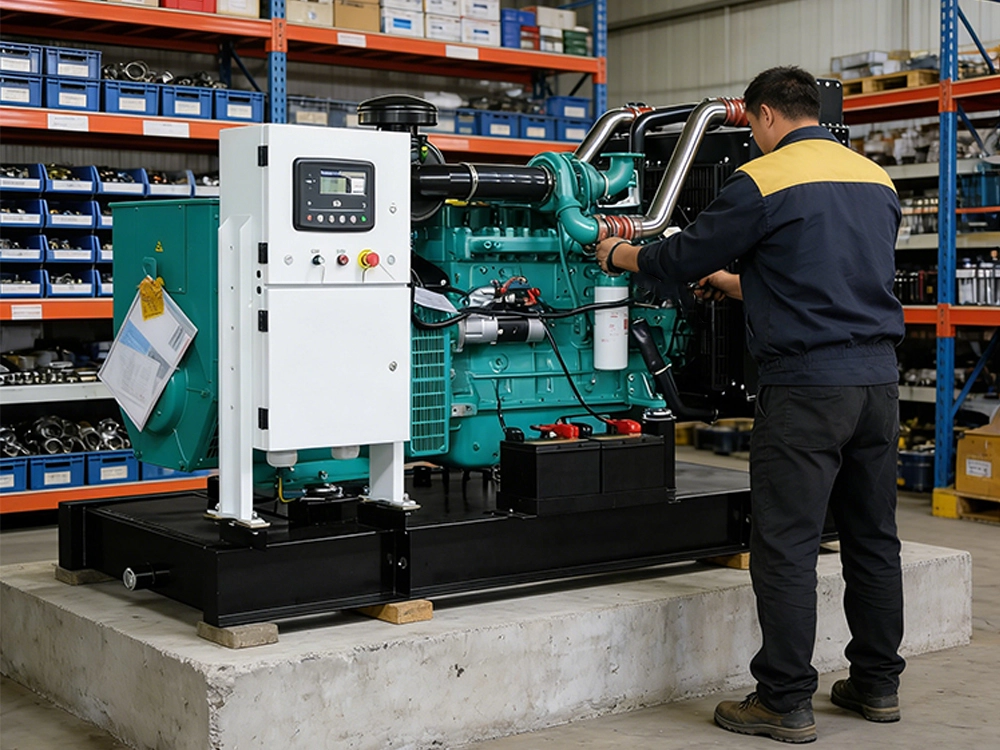
Why the Starter Battery is Your First Line of Defense
A Generator Starter Battery has one primary job: to deliver a massive, instantaneous burst of power to crank the diesel engine. Unlike batteries designed for long-term energy delivery, it is built for short, high-power discharges. When the main grid fails, the battery must instantly respond, turning the engine's flywheel against significant compression forces.
A failure here means your entire investment in backup power is useless. Understanding that a starter battery is a highly specialized component is the first step in ensuring reliability.
Types of Starter Batteries: Understanding the Differences
Not all lead-acid batteries are the same. For generator applications, you'll primarily encounter three types, each with a different design philosophy.
| Battery Type | Primary Design Goal | Key Characteristics | Best For |
|---|---|---|---|
| Starting (Cranking) | Deliver very high current for a few seconds. | Thin plates for maximum surface area and burst power. High Cold Cranking Amps (CCA). Not designed for deep discharge. | Standard generator starting duty. This is the most common and recommended type. |
| Deep Cycle | Provide steady, lower power over a long period. | Thick plates to withstand repeated discharge and recharge cycles. | Powering accessories, inverters, or lights. Not suitable for dedicated starting. |
| Dual Purpose | A compromise between starting and cycling. | Moderate CCA and some deep cycle capability. A jack-of-all-trades, master of none. | Applications with very limited space that require one battery for both starting and a small accessory load. |
Key Specifications: CCA, RC, and Voltage
When selecting a Generator Starter Battery, you must speak the language of its specifications.
Cold Cranking Amps (CCA): This is the most critical number. It indicates the number of amps a battery can deliver at 0°F (-18°C) for 30 seconds while maintaining voltage above 7.2 volts. Diesel engines, with their high compression ratios, require high CCA ratings. Always choose a battery that meets or exceeds your generator manufacturer's requirement, especially in cold climates.
Reserve Capacity (RC): This measures (in minutes) how long a battery can run essential accessories if the generator's charging system fails. While less critical than CCA for starting, a higher RC provides a safety buffer.
Voltage: Industrial and commercial diesel generators almost universally require a 24V DC starting system. This is typically achieved by connecting two matched 12V heavy-duty, lead-acid batteries in series. Never mix old and new batteries in this setup.
Sizing and Selection: A Step-by-Step Guide
Choosing the correct battery isn't guesswork. Follow this process:
Consult the Manual: Your generator's operation manual specifies the minimum required CCA and battery group size. This is your non-negotiable starting point.
Assess Your Environment: If your generator is in an unheated enclosure in a cold climate, you may need to select a battery with a CCA rating 20-30% higher than the minimum to compensate for reduced chemical activity in the cold.
Choose the Technology:
Flooded (Wet) Lead-Acid: The standard, cost-effective option. Requires periodic checking and topping up with distilled water.
Absorbent Glass Mat (AGM): A premium, maintenance-free option. The electrolyte is suspended in glass mats, making it spill-proof, more resistant to vibration, and offering lower self-discharge. Excellent for reliability.
Plan for the Charger: A generator runs too infrequently to keep its batteries charged. An automatic, float-charge battery charger is mandatory. It keeps the battery at full charge without overcharging, significantly extending its life.
The Lifecycle and Factors Affecting Lifespan
A typical quality starter battery in generator service lasts 3-5 years, but poor conditions can cut that short. The main enemies of your Generator Starter Battery are:
Chronic Undercharging: The most common killer. If the automatic charger fails or is disconnected, the battery enters a state of sulfation, permanently losing capacity.
Excessive Heat: High ambient temperatures accelerate internal corrosion and fluid loss. Install batteries in a cool, ventilated location if possible.
Vibration: Diesel engines create vibration that can shake battery plates apart. Ensure batteries are securely fastened in a dedicated tray.
Deep Discharge: Accidentally leaving a control panel light on can deeply discharge a starting battery. Even one deep discharge can cause irreversible damage due to its thin-plate design.
Maintenance and Testing: Proactive Care
Prevent failure with a simple routine:
Monthly Inspection: Check terminals for clean, tight connections. Look for corrosion (a white, blue, or green powder). For flooded batteries, check fluid levels and top up with distilled water as needed.
Quarterly Voltage Check: Using a multimeter, check the static (off-charge) battery voltage. A fully charged 12V battery should read about 12.6V - 12.8V.
Annual Load Test: The only way to truly know a battery's health. A professional load test applies a high current similar to a start cycle and measures the voltage drop. This should be part of your annual generator service contract.
Conclusion: An Investment in Certainty
Your Generator Starter Battery is a small component with an outsized responsibility. View it not as a commodity, but as a critical insurance policy. By selecting the correct heavy-duty starting battery, pairing it with a quality automatic charger, and adhering to basic maintenance, you eliminate the single most common point of generator failure.
Don't let a $200 battery compromise a $20,000 power system. Make the informed choice to ensure that when the lights go out, your first line of defense is ready to answer the call.
References
WSSC Code of Regulations. (2006). 11.120.410 Starting system.
Redway Power. (2025). Why Starting Batteries Are Not Suitable for Long-Term Power.
Zhangqiaokeyan Patent Platform. (2024). Engine-Driven Generator.
Johnson, M. (2022). Emergency Power Systems: A Comprehensive Guide to High-Speed Diesel Generators. Power Engineering Quarterly, 45(3), 78-92.